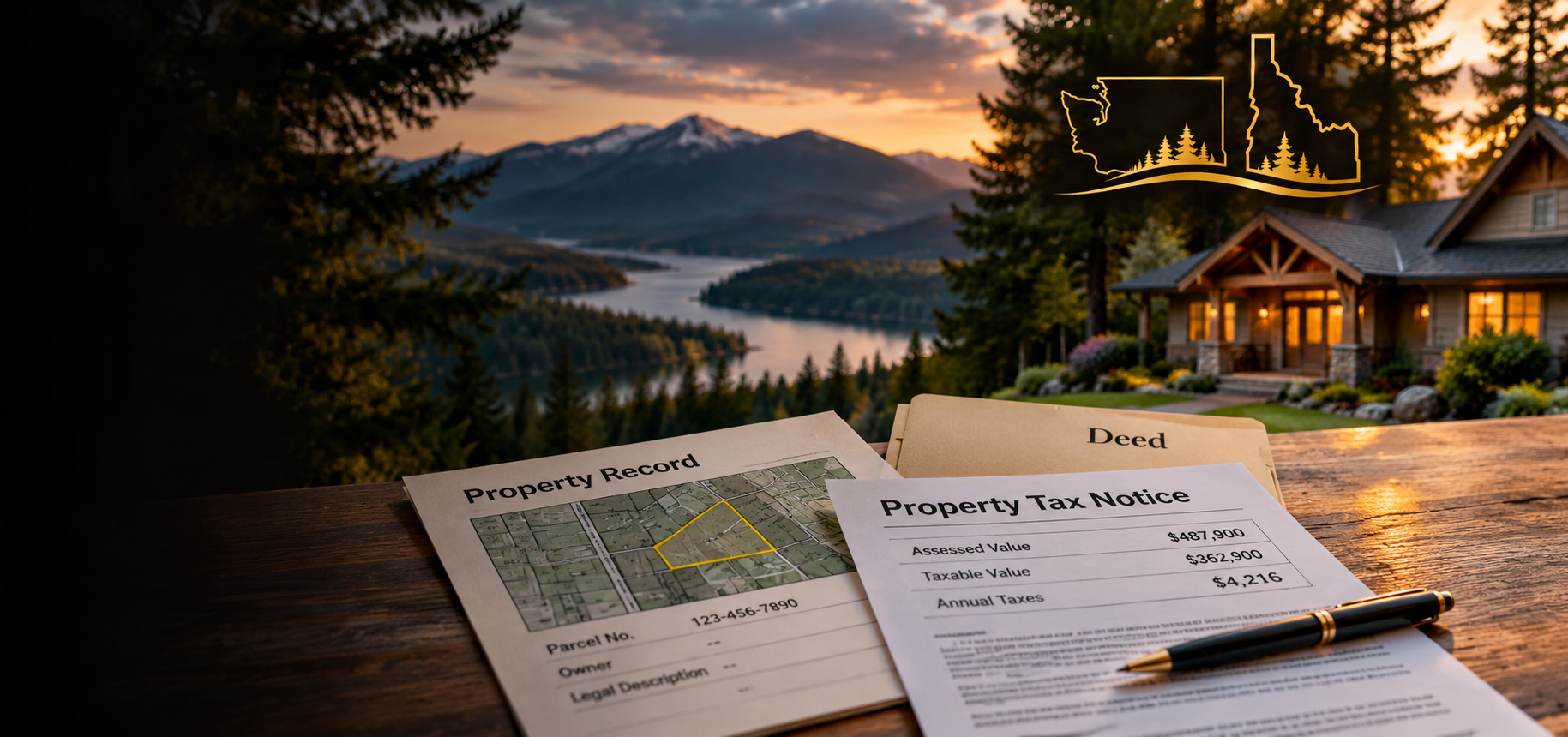
Property Taxes, Assessments & Records. Know What You're Looking At.
County records can tell you a lot about a property before you buy: assessed value, taxes, ownership, parcel boundaries, legal descriptions, exemptions, taxing districts, and other public information. The key is knowing which records matter and which office maintains them.

Start With the Parcel
What Public Property Records Can Help You Understand
Public records are useful for understanding the basic legal, tax, and assessment framework of a property. They are a starting point for research, not a substitute for title work, surveys, inspections, or legal advice.
Ownership & Parcel Identification
Assessor and land-record systems commonly show the owner of record, parcel number, legal description, and other information used to identify the property.
Assessed Value
The assessor assigns a value for property-tax purposes. This is different from a mortgage appraisal and should not automatically be treated as the property's current market value.
Taxing Districts
A property may be subject to levies from multiple taxing districts, such as counties, cities, schools, fire districts, libraries, and other local entities.
Parcel Maps
Parcel maps can help you understand the general shape and location of a parcel, but they should not be treated as a boundary survey.
Exemptions
County records may show whether an existing owner is receiving a homeowner or other exemption. A buyer may need to apply separately after purchasing the property.
Tax History
Historical tax information can be helpful, but do not assume the seller's current tax bill will remain the same after a sale, exemption change, reassessment, or new levy.
Idaho & Washington
Property-Tax Rules Are Not the Same on Both Sides of the State Line
The underlying idea is similar — local assessors determine taxable property values and local levies affect the tax bill — but homeowner exemptions and relief programs differ significantly.
Idaho
Homeowner's Exemption
An eligible owner who occupies an Idaho home as their primary residence may qualify for Idaho's homeowner's exemption.
The exemption removes 50% of the value of the home and up to one acre of land from taxable value, up to a maximum exemption of $125,000.
Buyers apply through the county assessor after they own and occupy the home as their primary residence.
Washington
Targeted Exemptions & Deferrals
Washington does not use the same broad homeowner-exemption structure as Idaho.
Property-tax relief is available through specific programs for qualifying homeowners, including certain seniors, people with disabilities, veterans, and limited-income homeowners.
Eligibility and benefit amounts depend on the applicable program, income, residence, and county requirements.
Before You Buy
A Better Property-Record Checklist
Property records can help you spot questions early, but the goal is not to replace professional due diligence.
Verify the Parcel
Make sure the parcel number and legal description correspond to the property you believe you are purchasing.
Review the Current Tax Bill
Look at the current tax amount, but understand that exemptions, reassessments and levies can change future taxes.
Check Existing Exemptions
A seller's exemption does not necessarily transfer to you. Determine whether you will need to apply after closing.
Compare County Records With Title
Public records are helpful, but title work is the better source for ownership, liens, easements and recorded interests.
Official Resources
Property Records & Tax Resources
Use official county and state resources when researching property ownership, assessments, taxes, exemptions, and tax-relief programs.
Kootenai County
Land Records & Parcel Information
Access parcel maps, ownership information, taxing districts, assessment-related GIS data and other county land-record resources.
Explore Land Records →Kootenai County Assessor
Idaho Homeowner's Exemption
Review current Kootenai County application requirements for eligible owner-occupied primary residences.
Review Exemption Information →Idaho State Tax Commission
Idaho Property-Tax Relief
Learn about Idaho's homeowner exemption and other available property-tax relief programs.
Visit Idaho Tax Commission →Spokane County
Property Information Search
Access Spokane County Assessor and Treasurer property valuation and property-tax information.
Search Spokane Property Records →Spokane County Assessor
Senior & Disabled Tax Exemption
Review current application materials and eligibility information for qualifying Spokane County homeowners.
Review Spokane Exemptions →Washington Department of Revenue
Washington Tax Relief Programs
Review statewide property-tax exemptions, deferrals and assistance programs for qualifying Washington homeowners.
Explore Washington Programs →