
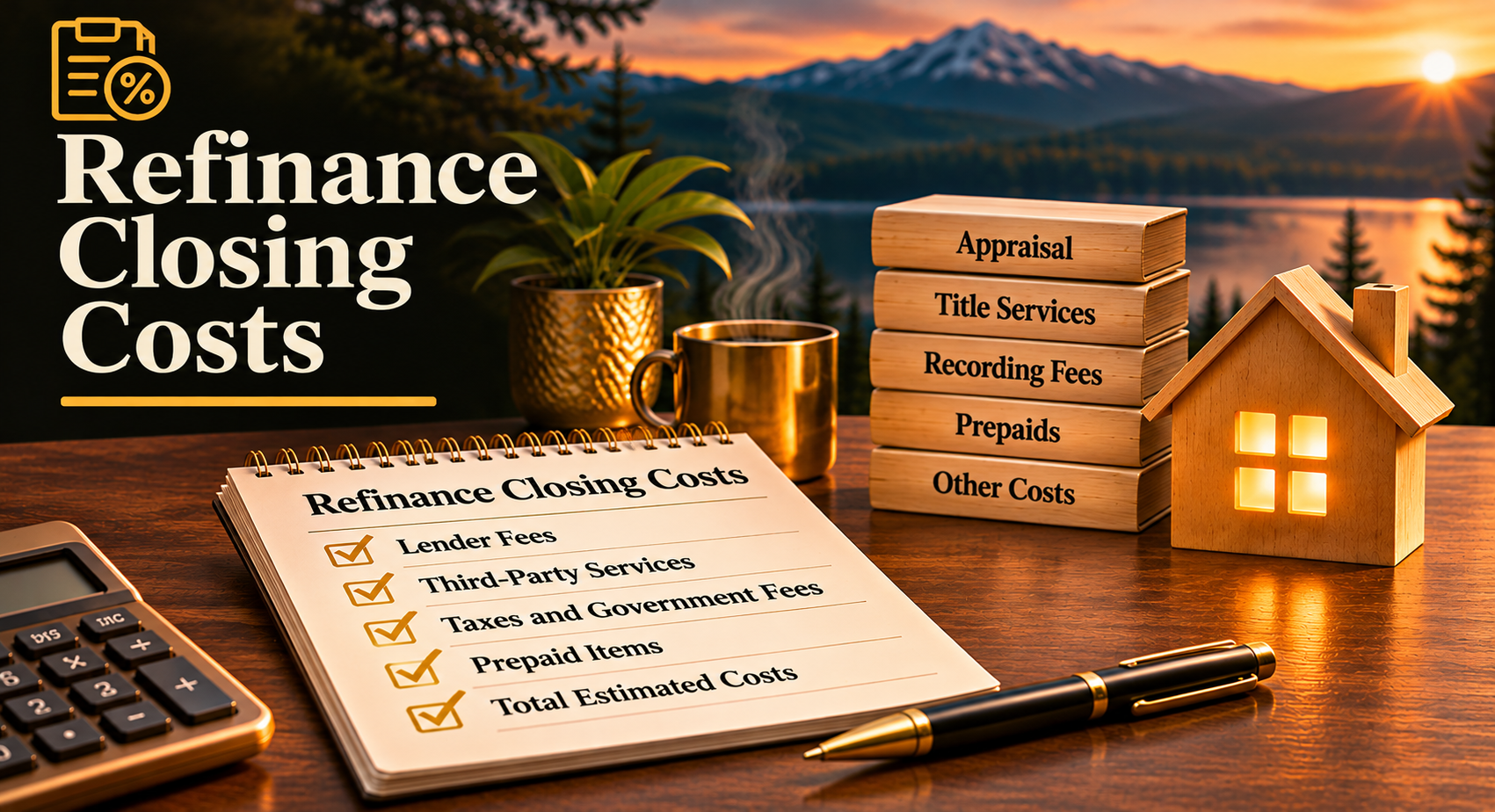
Understanding the Costs of Replacing Your Mortgage
Refinancing creates a new mortgage, which means the transaction can include lender charges, title and settlement services, appraisal costs, recording fees, prepaid interest, escrow-related funds, and other expenses. Understanding which costs are true loan expenses, which are prepaid items, and how they are paid can help you compare the refinance with the mortgage you already have and determine whether the potential benefit justifies the cost.
What Makes Up Refinance Closing Costs?
Not Every Amount Due at Closing Is the Same Kind of Cost
A refinance can include charges for obtaining the new mortgage, services performed by outside companies, government or recording expenses, and funds collected in advance for interest, taxes, or insurance. Understanding those categories makes the total easier to evaluate.
Loan-Related Charges Associated With Obtaining the New Mortgage
Appraisal, Credit, Settlement, and Other Outside Services May Apply
Title, Settlement, Recording, and Applicable Government Charges
Funds Collected for Interest, Taxes, Insurance, or a New Escrow Account
What Are Refinance Closing Costs?
Refinancing replaces your existing mortgage with a new loan, so the transaction can involve many of the same services and expenses required when a mortgage is originally created.
Some amounts are true costs of obtaining the new mortgage, while others are funds collected in advance for expenses such as interest, property taxes, homeowners insurance, or a new escrow account.
The amount shown as due at closing may include actual loan costs as well as prepaid expenses, escrow deposits, payoff adjustments, and other transaction amounts. Those categories should be evaluated separately.
What Lender Charges Can Be Part of a Refinance?
The new mortgage may include charges related to originating, processing, underwriting, or otherwise obtaining the loan. The specific charges depend on the lender, loan program, pricing structure, and transaction.
Loan Origination
Charges associated with arranging and originating the new mortgage may appear as part of the loan costs.
Discount Points
A borrower may choose a pricing structure that includes points or another upfront cost in exchange for a different interest rate or loan pricing.
Other Loan Charges
Additional lender-related charges may apply depending on the mortgage, loan program, and transaction structure.
What Third-Party Services May Be Required?
A refinance often requires work performed by companies other than the lender. Those services can create additional transaction costs.
Appraisal or property valuation
Credit-related services
Title search and title insurance
Settlement or closing services
Recording services
Other transaction-specific services
Why Are There Title Costs on a Refinance?
Even though you already own the property, the new lender generally needs to confirm the property's ownership, liens, and title position before placing a new mortgage against the home.
Title and settlement costs may therefore be part of a refinance even though there is no home purchase taking place.
Are There Government or Recording Fees?
The new mortgage or deed of trust generally must be recorded in the applicable public records. Recording charges and other government-related fees may apply depending on the property location and transaction.
What Are Prepaid Items?
Prepaid items are amounts collected for expenses that relate to owning the home or carrying the mortgage rather than fees charged simply for obtaining the new loan.
Prepaid Interest
Interest may be collected for the period between the refinance funding date and the point at which the new payment cycle begins.
Homeowners Insurance
Insurance-related amounts may be collected depending on when premiums are due and how the new loan is structured.
Property Taxes
Tax-related amounts may be collected or adjusted depending on timing, escrow requirements, and the transaction.
Why Might a New Escrow Account Need to Be Funded?
If the new mortgage includes an escrow account, funds may be collected at closing so the new servicer has enough money available to pay future property tax and homeowners insurance bills when they become due.
This can make the amount needed at closing look larger, even though escrow funding is different from paying a lender or third-party fee.
A refinance can require a new escrow account to be funded before the old mortgage servicer returns any remaining eligible escrow balance from the prior loan. That timing can temporarily increase the amount of funds tied up in the refinance without necessarily increasing the true cost of the loan by the same amount.
Why Is the Mortgage Payoff Higher Than the Statement Balance?
The payoff amount on the existing mortgage is not necessarily the same as the principal balance shown on your latest statement.
A payoff can include interest through the expected payoff date and other applicable amounts needed to fully satisfy the current loan.
This difference is part of paying off the old mortgage rather than a new refinance fee.
How Can Refinance Costs Be Paid?
The available options depend on the loan program, equity position, lender pricing, and transaction structure.
Pay With Your Own Funds
Paying eligible costs directly can help keep the new mortgage balance lower.
Finance Eligible Costs
Depending on the transaction and available equity, certain eligible costs may be incorporated into the new mortgage rather than paid entirely out of pocket.
Use Lender Credits
A lender credit may offset certain upfront costs, typically in exchange for different interest-rate or loan pricing.
What Do Lenders Mean by a “No-Closing-Cost Refinance”?
You may see mortgages described or advertised as having “no closing costs,” but that does not necessarily mean the refinance has no cost to the borrower.
In some structures, lender credits may offset certain upfront charges in exchange for a higher interest rate or different loan pricing. In other situations, eligible costs may be incorporated into the new loan balance when permitted by the loan structure and available equity.
The more useful question is not simply whether you write a check for closing costs. It is how those costs are being covered and what that choice does to the interest rate, new loan balance, monthly payment, and overall cost of the mortgage.
The expenses of the transaction still have to be accounted for. A lender credit may offset eligible costs upfront, certain costs may be financed when permitted, or the loan may be priced differently. Compare the interest rate, lender credits, new loan balance, monthly payment, and total cost—not just the amount due at closing.
Why Do Closing Costs Matter to the Break-Even Point?
Closing costs affect how long it may take for the financial benefit of a refinance to outweigh the expense of replacing the current mortgage.
For example, if a refinance reduces the monthly payment but requires meaningful upfront costs, the homeowner may need to keep the new loan long enough for the cumulative savings to recover those expenses.
For a deeper look at that decision, see when refinancing makes sense .
Compare the Cost of Refinancing With the Benefit You Receive
Closing costs should not be evaluated in isolation. A refinance that costs more upfront may still make sense if it produces enough benefit over the time you expect to keep the new mortgage.
Compare the true loan costs, prepaid items, escrow funding, monthly savings, new interest rate, loan balance, loan term, and expected time in the mortgage before deciding whether the transaction is worthwhile.