
Understanding What You Pay at Closing
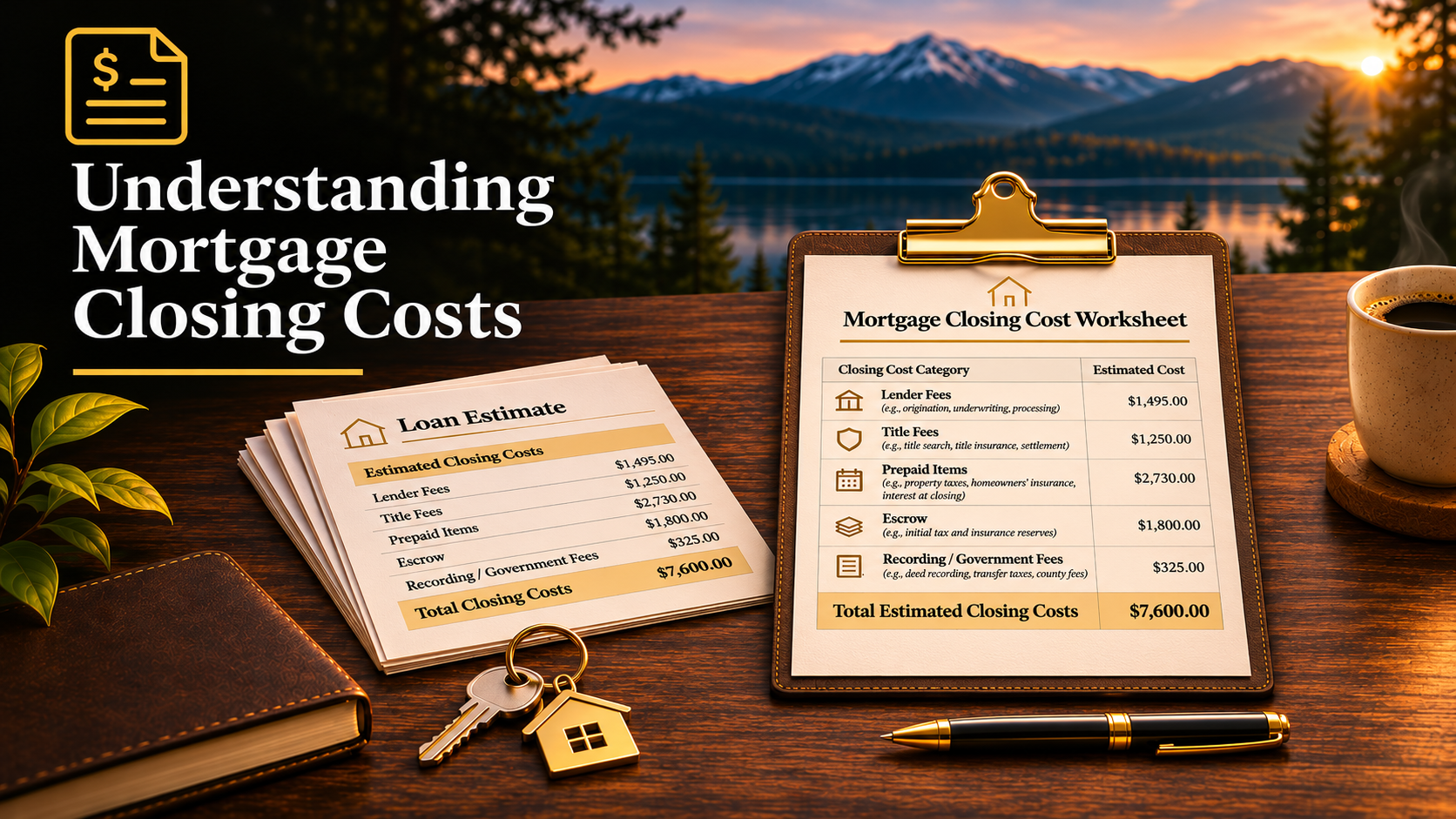
Closing costs are separate from your down payment and can include lender charges, title and settlement services, appraisal costs, government fees, prepaid expenses, and other transaction costs. Understanding what those charges represent can make your Loan Estimate and final closing figures much easier to understand.
Understanding Closing Costs
Not Every Dollar Due at Closing Is a Closing Cost
The amount you bring to closing can include several different categories of money. Your down payment, lender and third-party charges, prepaid expenses, escrow deposits, and available credits all contribute to the final cash-to-close figure.
Your Contribution Toward the Purchase Price
Charges Related to Processing and Financing the Loan
Services That Help Complete and Protect the Transaction
Appraisal, Credit, Recording & Other Outside Services
Taxes, Insurance, Interest & Initial Reserve Deposits
Seller, Lender or Other Allowable Contributions Can Reduce Cash Needed
What Are Mortgage Closing Costs?
Closing costs are the expenses associated with obtaining the mortgage and completing the real estate transaction. They are separate from the portion of the purchase price you are paying as a down payment.
Some charges come from the lender, while others are paid to title companies, appraisers, government agencies, insurance providers, and other parties involved in completing the purchase.
Is Your Down Payment Part of Closing Costs?
No. Your down payment and your closing costs serve different purposes, even though both may be due when you close on the home.
Down Payment
The portion of the purchase price that you are paying rather than financing through the mortgage.
Closing Costs
The charges and expenses associated with financing, transferring, documenting, and completing the transaction.
For a broader look at the funds involved in buying a home, see how much money you need to buy a home .
What Lender Costs Can Be Included?
Some closing costs are directly related to obtaining the mortgage. The specific charges depend on the lender, loan program, pricing structure, and services required for the loan.
Origination or lender charges
Underwriting or processing-related charges
Credit-related fees
Discount points, if chosen
Our Mortgage Rate vs APR guide explains how rate and financing costs relate.
What Are Title and Settlement Costs?
Title and settlement services help verify ownership, identify certain issues affecting title, prepare the transaction for closing, and complete the transfer of the property.
Title Search
A review of public records to identify ownership information, liens, and other matters that may affect title to the property.
Title Insurance
Title insurance may protect the lender and, depending on the policy, the homeowner from certain covered title-related issues.
Settlement or Closing Services
The settlement provider coordinates documents, funds, signatures, recording, and other parts of completing the transaction.
What Other Third-Party Fees May Appear?
A mortgage transaction often requires services from companies or professionals outside the lender and title company. These charges can vary based on the property, loan program, and location.
Appraisal
An appraisal may be required to provide an independent opinion of the property's value for the mortgage transaction.
Government & Recording Charges
Recording fees and other government-related charges may apply when ownership and mortgage documents are officially recorded.
What Are Prepaid Expenses and Escrow Deposits?
Prepaid expenses and initial escrow deposits can increase the amount due at closing, but they are different from fees charged for obtaining the mortgage.
These amounts generally represent expenses associated with owning the home or amounts collected in advance for future bills.
Prepaid mortgage interest
Homeowners insurance premiums
Initial property tax escrow deposits
Initial insurance escrow deposits
Can Closing Costs Be Reduced With Credits?
Depending on the transaction and loan program, allowable credits or contributions may reduce the amount of money you need to bring to closing.
Seller Contributions
A seller may sometimes contribute toward allowable buyer closing costs, subject to the purchase agreement and loan-program limits.
Lender Credits
A lender credit may reduce certain upfront costs in exchange for a different interest-rate or pricing structure.
Other Allowable Assistance
Certain programs, gifts, or assistance sources may help with eligible transaction costs when permitted by the loan guidelines.
Where Can You See Your Estimated Closing Costs?
Your Loan Estimate provides an early breakdown of the estimated costs and cash required for the transaction. It separates lender charges, third-party services, taxes and government fees, prepaids, escrow deposits, and other items.
As the transaction progresses, some figures may change as actual services, insurance premiums, taxes, title charges, credits, and other final amounts become known.
Understanding why each amount is being collected makes it easier to recognize whether a difference comes from financing costs, third-party charges, prepaid expenses, or the structure of the transaction.
Why Can the Final Amount Due at Closing Change?
Early figures are estimates. As the closing date approaches, the lender and settlement provider receive more precise information about the transaction.
Changes can come from the final closing date, homeowners insurance premium, property tax information, title charges, seller credits, lender credits, purchase-contract adjustments, and other transaction-specific items.
Reviewing updated figures as the loan moves toward closing can help you understand what changed and why.
Look at Closing Costs as Part of the Whole Mortgage
Upfront cost matters, but it should not be evaluated in isolation. A mortgage with lower cash due at closing can have different pricing, while another option may require more upfront but produce a different rate or monthly payment.
The most useful comparison considers your cash to close, interest rate, APR, monthly payment, available savings, and how long you expect to keep the loan.
If you are still estimating your overall homebuying budget, start with our guide to how much money you need to buy a home .