
What Lenders Need to Verify Before You Close
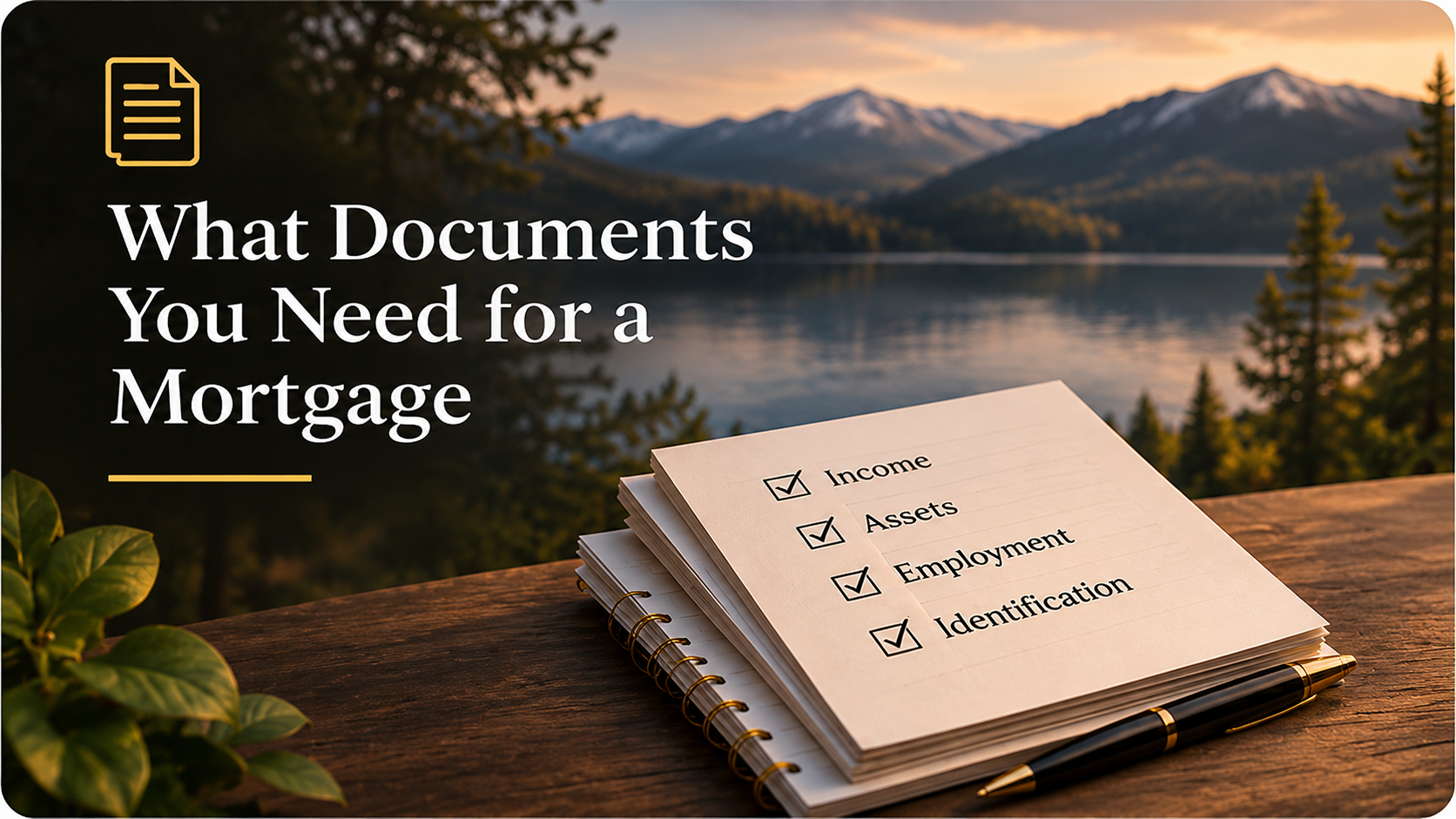
Know what to gather before you apply, from income and asset statements to employment and identification documents.
Mortgage Document Checklist
What Types of Documents Might You Need?
The exact documents depend on your income, assets, loan program, and financial situation, but most mortgage files involve a few common categories.
Pay Stubs, W-2s & Other Income Records
Employer & Work History Information
Bank, Investment & Retirement Statements
Tax Returns When Required
Identity & Residency Documentation
Purchase & Property-Related Documents
Why Do Mortgage Lenders Need So Many Documents?
Mortgage approval is based on more than a credit score. A lender generally needs to verify the income being used to qualify, the funds available for the transaction, your current debts, your employment situation, and certain details about the property being financed.
The exact documentation varies by borrower and loan program. A salaried employee with a simple financial profile may need relatively little, while a self-employed borrower, real estate investor, or borrower using several income sources may need additional documentation.
Gathering the most common documents early can make your mortgage pre-approval more accurate and help prevent delays once you are under contract.
Think of this guide as a preparation checklist rather than a list of documents every borrower will automatically be required to provide.
Income Documentation
The lender needs to determine whether the income being used to qualify is stable, documentable, and eligible under the selected loan program.
The documents required depend heavily on how you earn your income.
If You Are a W-2 Employee
Recent pay stubs
W-2 forms
Employer information
Documentation for bonuses, commissions, overtime, or other variable income when needed
If You Are Self-Employed
Self-employed income usually requires a deeper review because the income used for mortgage qualification may differ from the gross revenue generated by the business.
Personal tax returns when required
Business tax returns when required
K-1s, 1099s, or other applicable income records
Year-to-date profit and loss statement when required
Some borrowers who do not qualify using traditional income documentation may also have access to certain Non-QM mortgage programs with alternative documentation requirements.
Other Types of Income
Many borrowers qualify using income that does not come from a traditional salary. The lender may need documentation showing both the amount of the income and whether it is expected to continue.
Social Security or Retirement
Award letters, benefit statements, pension statements, retirement account records, or bank statements showing receipt of the income may be requested.
Rental Income
Tax returns, current lease agreements, mortgage statements, or other property documentation may be needed depending on the situation.
Commission, Bonus or Overtime
Pay stubs, W-2s, employment verification, and a history of receiving the income may be reviewed.
Other Documented Income
Alimony, child support, disability income, trust income, notes receivable, or other income may require documentation specific to that income source.
Assets and Funds for Closing
Lenders may review your assets to verify that you have enough money for the down payment, closing costs, prepaid expenses, and any reserves required by the loan program.
The lender may also need to verify the source of funds being used in the transaction.
Checking account statements
Savings account statements
Investment or brokerage statements
Retirement account statements
Documentation for gift funds when applicable
Documentation for other funds being used in the transaction
For a broader look at down payment, closing costs, prepaid expenses, and reserves, see How Much Money You Need to Buy a Home .
Credit and Debt Documentation
In many cases, the lender obtains your credit report directly, so you do not need to provide copies of every credit-card or loan statement at the beginning of the process.
Additional documentation may be needed when an account requires clarification or when the payment shown on the credit report does not accurately reflect the obligation.
Student-loan documentation when needed
Payoff statements for debts being paid off
Documentation for debts not appearing correctly on credit
Documentation related to certain disputed or unusual accounts
Your credit profile can influence both qualification and available loan options. Learn more in What Credit Score You Need to Buy a House .
Monthly obligations are also used to calculate your debt-to-income ratio .
Identification and Personal Information
Mortgage lenders also need basic identifying information to verify your identity, obtain credit, and complete required loan documentation.
Government-issued identification
Social Security number
Current address and housing history
Residency or eligibility documentation when applicable
Property Documents
Once you are under contract, the lender will also need information about the property itself. Some of this comes from you or your real estate agent, while other items are ordered during the mortgage process.
Fully executed purchase agreement
Addenda or amendments to the contract
Homeowners insurance information
HOA or condominium information when applicable
Certain property types can require additional documentation. For example, manufactured homes may involve title, foundation, HUD-label, or other property-specific requirements, while construction financing can require plans, budgets, contracts, and builder documentation.
Why You May Be Asked for Updated Documents
Mortgage documents need to reflect your current financial situation. Because a purchase transaction can take several weeks, documents that were current when you applied may need to be updated before closing.
For example, you may be asked for a newer pay stub, a more recent bank statement, or updated employment information even if you already provided something similar earlier.
Often the lender simply needs the most recent version of a document before the loan can receive final approval.
When Should You Start Gathering Documents?
Ideally, before you begin seriously shopping for a home.
Having your documents available early gives your mortgage professional a better opportunity to review your income, assets, debts, and overall qualification before you make an offer.
That can make your pre-approval more meaningful and reduce the chance of discovering an avoidable documentation issue after you are already under contract.